John Freemuth is a professor of public policy and senior fellow at the Cecil Andrus Center for Public Policy, Boise State University.
Author: Gary E Richardson
Misfortune at the Malheur National Wildlife Refuge in Harney County, Oregon
For the past week or so, I’ve been commenting and posting information on my Facebook page about the ongoing occupation of the national bird sanctuary near Burns, Oregon, a couple hundred miles from my Boise, Idaho, home.
I thought it might be useful, or at least entertaining, to collect those posts here, along with the many links to other information and background about the militia takeover and some of those involved. I have long been interested in the power of agreement, a phrase I picked up from Paul Crockett, the desert sage who rescued several people from the Manson “family” in the late 1960s.
I am fascinated by the ways some among us are able, occasionally, to awaken from what Gurdjieff likened to the early stages of hypnosis, in which he found the vast majority of humans almost all of the time. We are terribly vulnerable and quite susceptible to having others shape what we consider to be the “real” world.
So, here goes the collection of my thoughts, and others’, about the events unfolding not far from here, in reverse chronological order—moving from recent to earlier events and postings.
Wednesday, Jan. 13
Mix Heather, Sage, and Boyle—what a brew:
Tuesday, Jan. 12
A picture worth a thousand words:
More details of the conspiracy leading up to the armed occupation of the Malheur NWR, followed by many eye-opening comments of both supporters & detractors:
Monday, Jan. 11
More backstory on the Hammonds’ and others’ law-breaking and intimidation of federal employees and their families in Harney County, Oregon. While there are a few minor inaccuracies in this story, it paints a pretty clear picture of a problem that has been festering there for decades. The Bundys are not the first troublemakers to target the area. Most of the article was published in the “Village Voice” in the mid-1990s:
wise words:
According to the Oregonian, Idaho state legislators Judy Boyle, Heather Scott and Sage Dixon were among a half-dozen out-of-state lawmakers who met with the Bundy gang on a “fact-finding mission” Saturday.
Beware the righteous man doing the bidding of his God.
Ammon Bundy tells how the Lord directed him: “I did exactly what he Lord asked me to do….I was to call all these people together….to participate in this wonderful thing that the Lord is about to accomplish.”
…and, oh, so, so sincere….
YOUTUBE.COM
Sunday, Jan. 10
Bundys’ anti-federal Mormonism has deep roots—Ammon, Capt. Moroni & modern-day, self-styled “Nephites”:
Capt. Moroni: https://youtu.be/1KHuOpE578M
Ammon: https://youtu.be/9E4Qr0ZkRKg
To folks who might think these kinds of beliefs are harmless, I strongly recommend Jon Krakauer’s “Under the Banner of Heaven.”
and…
Jeffrey Lundgren & the Kirtland Temple: Another modern example of Mormon scriptural belief gone awry:
Friday, Jan. 8
The book of ‘Alma,’ chapters 17 ff, in the ‘Book of Mormon’ may offer clues to Ammon Bundy’s behavior.
Is he living out a convoluted interpretation of the life of his namesake? In Joseph Smith’s story, Ammon goes to the land of Ishmael, where he sees his chance to use the Lord’s power to win the hearts of the Lamanites. Then they would listen to his teachings:
In addition to the church of “latter-day saints” based at Salt Lake City, there are 70-some other Mormon sects. At least one fundamentalist group is based on the Arizona border, at Cedar City, Utah, where Ryan Bundy runs his construction company.
The Bundys’ seditious actions have been decried by the SLC church. To which Mormon Lord is Ammon Bundy listening?
Jon Krakauer, author of “Under the Banner of Heaven,” chimes in on the Bundys:
Thursday, Jan. 7
Laughter is the best medicine for the humorless jailbirds-to-be holed up at an Oregon bird sanctuary.
I like Robert Ehlert’s concluding comment of his editorial in today’s Idaho Statesman:
“The occupiers should take a clue from the tundra swans who visit in late fall and early winter at the refuge. They gather in the various ponds and their voices carry long distances. Though some stay, others know when it is time to move on.”
Wednesday, Jan. 6
Bill Kittredge, who grew up and ranched in southeastern Oregon’s Warner Valley, offers some deep insight into the myth of the West that is fueling much of the anti-government furor we’re seeing:
“…that old attitude from my childhood, the notion that my people live in a separate kingdom where they own it all, secure from the world, is still powerful and troublesome.”
Here is a link to an extended quotation from Bill Kittredge’s “Owning It All,” which captures the essence of the confusion about property that propels so much of the current anti-government, take-“back”-the-land nonsense:
The Ranch Dividians and their Republican supporters/apologists appear to be reading a constitution and listening to a god that don’t exist, except in a closed-off corner of their narrow minds:

Ammon Bundy arrives to address the media at the Malheur National Wildlife Refuge near Burns, Ore., on Jan. 4, 2016. (Jim Urquhart/Reuters)
From Kim Davis to Oregon, the GOP’s love affair with lawbreakers
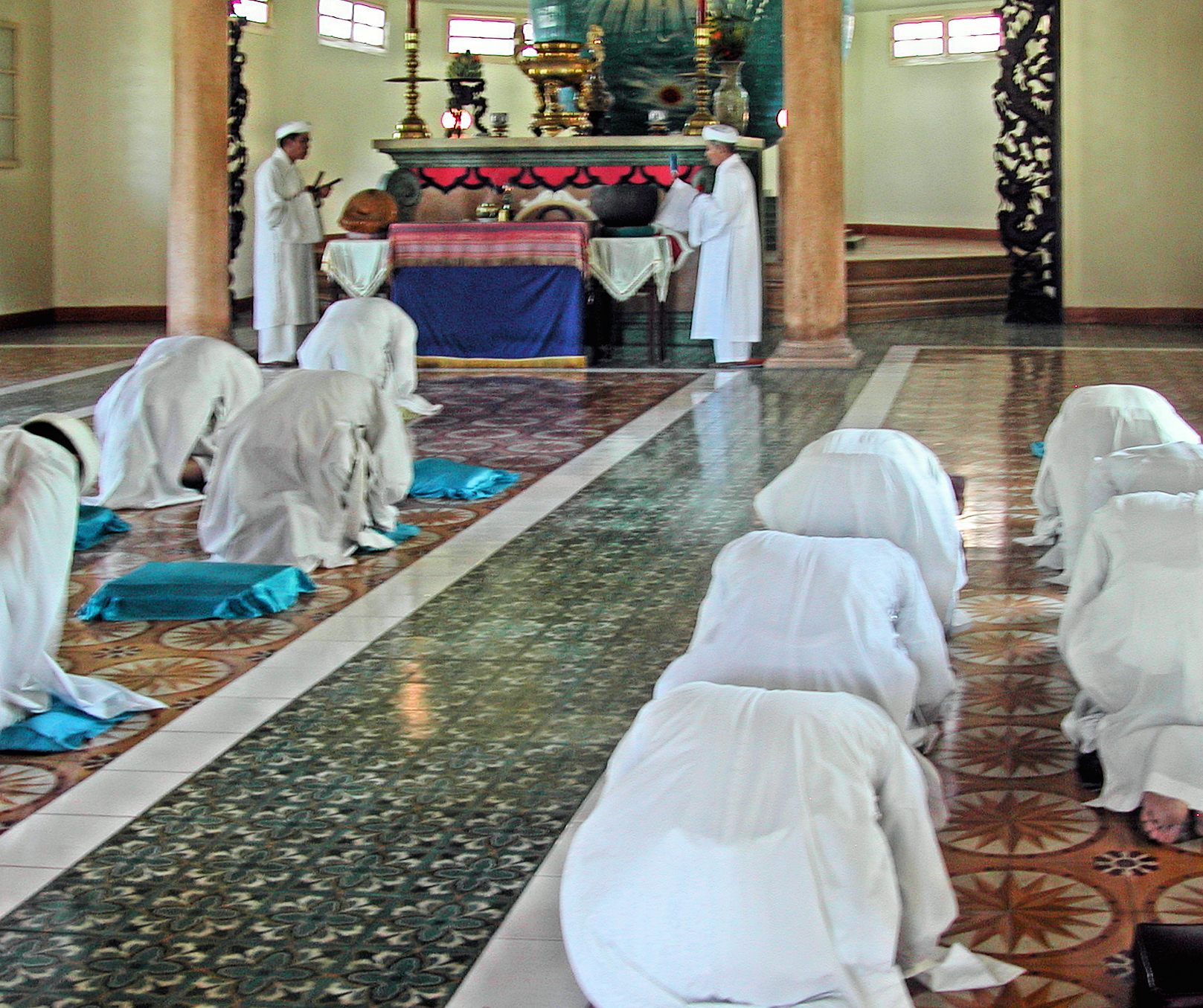
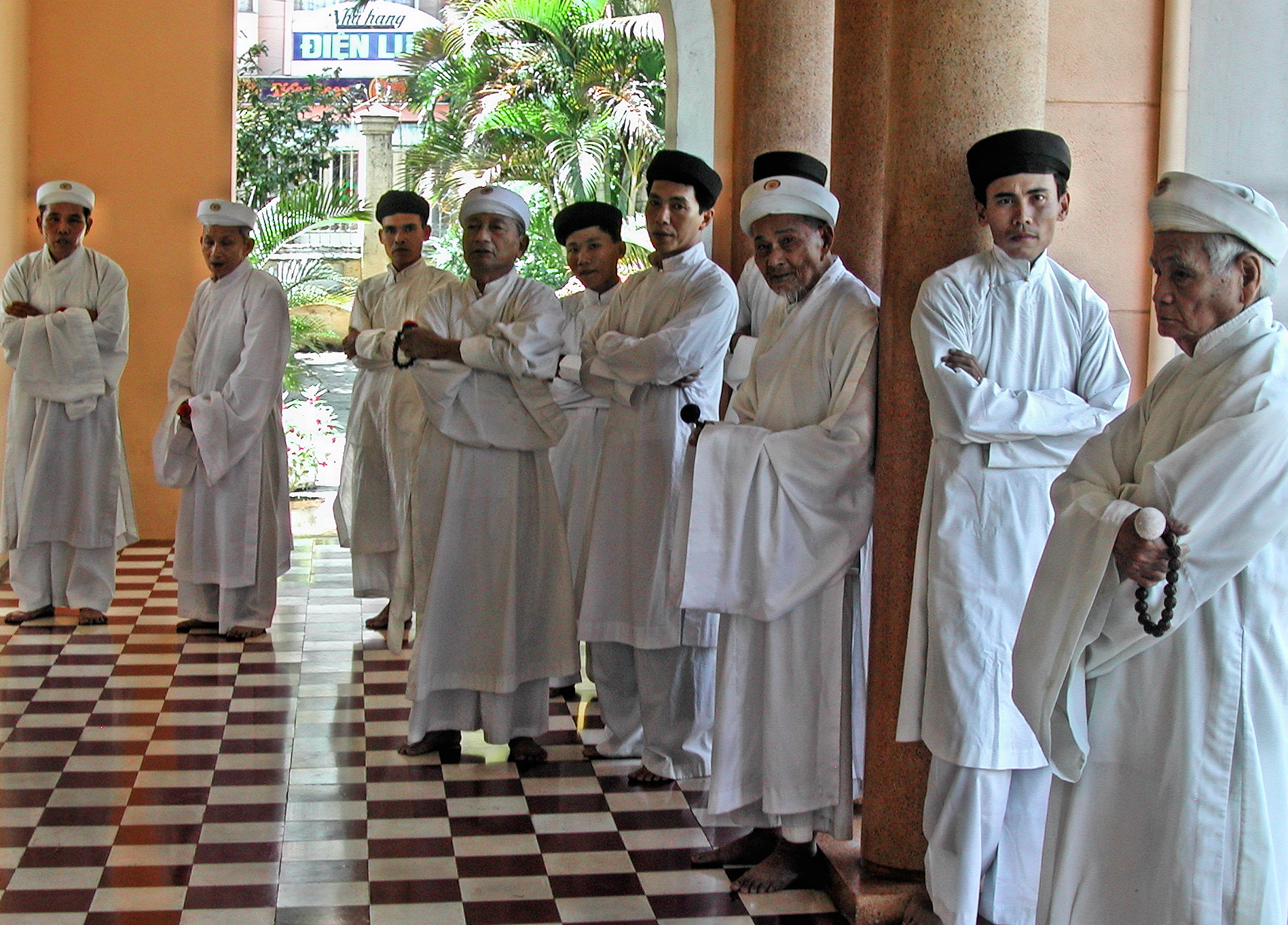
Visit to a Cao Dai Temple in DaNang, VietNam, 2002
Judy Peavey-Derr inserts foot in mouth, big time!
…I think that the south end of town is getting blighted by a lot of refugees and different dialects coming into the school. I think the children are having — 124 dialects in one school system is a little rough. And I think it’s a big strain on the teachers. And so I would like to see — I know they’ve done the Vista neighborhood push to try to get more money in there. But I think they caused the problem to begin with. —Judy Peavey-Derr, responding to an Idaho Statesman reader panel request to explain her charge that Mayor Bieter has neglected south and west Boise
In the interest of full disclosure: In her apparent quest to be elected to every local seat of government, in 1998 Judy P-D ended my brief political career as the biking ACHD commissioner who didn’t own a car. When a liberal looks politically promising in Boise, the tea-party types roll out J P-D. The campaign was a nasty affair; P-D and her repugnican handlers played their dirty tricks. People called with tales to tell; I refused to mud-wrestle.

The ” New” J P-D
They’ve rolled her out again, with a full, skin-deep makeover. The nastiness is still there not far beneath the surface, as demonstrated by yesterday’s diatribe.
Statesman reader responses to J P-D’s crass comments have been reassuring. Perhaps the best was this link to a video illustrating the success of a refugee who, like most, came here with nothing:
As some readers note, J P-D’s comments may well be an intentional Trump card played to win the votes of the anti-immigration crowd, several of whom raised their ugliness among the Statesman comments. One wag noted that there was, perhaps intentionally, some syntactical confusion of “dialect” with “language” and “refugee” with “immigrant.”
We have only to recall the generosity Boiseans have shown for the unfortunate refugees whose enterprising international market burned down, to realize how wrong J P-D is about our town.
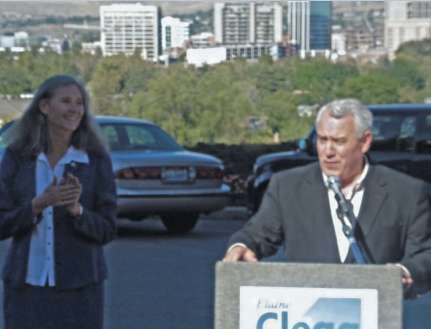
Elaine Clegg Cites Boise Successes and Work Yet to Be Done in Announcing Re-election Campaign
Mayor Hails Clegg as “Conscience of the City”
Friday afternoon, Sept. 18, 2015, Boise Mayor Dave Bieter kicked off city council member Elaine Clegg’s re-election campaign by noting that he and Clegg were both first elected in 2003. He got to know her well in their early years on
the council as they worked through “some really hard, tough sledding,” including the economic downturn, “to see the great times we see in Boise now.”
“Elaine Clegg is the conscience of the mayor and council, and of the city,” Bieter said. “She approaches every issue relentlessly. She looks at every plat; she reads every document. She makes sure that we never lower our standards in any way. She’s never caught off guard; she’s always ready to go. She’s known not only locally but nationally for her efforts in transportation and smart growth.
“As long as Elaine Clegg wants to do this, I don’t want to live in a city without electing her.”
First-class Transportation for 21st-Century Economy
“This is an exciting time for the city,” Clegg acknowledged. “I decided to run for a fourth term because of all the great things that have been happening, but even more importantly because we are on the cusp of so many more. The great things that have happened have set us up for an even brighter future.”
Clegg pointed to several city projects she helped start, which she wants to see to completion.
She noted that the city has done a lot over the last few years to improve transportation by, for instance, adding bus routes to the airport, southwest and southeast Boise and extending hours on State St. and Fairview. “We can do better on providing transportation choices,” Clegg added.
“With the Boise can-do spirit, instead of looking to the legislature to solve the issue, we can together find a permanent and dedicated source of funding for expansion of our transit system right here in the Treasure Valley.” The Idaho Legislature has been unwilling to grant local-option taxing authority to cities for transit funding, so Clegg is working on other, innovative options.
“A first-class transportation system will help drive a 21st-century economy,” Clegg said.
Standing before a group of supporters at the Boise Depot, Clegg noted that she has been pushing for a multi-modal freight system “that will include using this great rail system that we have right behind us, and figuring out a way to move freight from truck to rail and rail to truck and utilizing…a great airport that could also be part of this freight-movement system.”
Helping Businesses “Start Up in a Day”
Clegg has championed Boise’s participation in “Start Up in a Day,” a Small Business Administration project for which Boise recently was selected: “With cities around the country, we’re in a contest …to figure out how entrepreneurs can walk into city hall at eight o’clock in the morning and walk out at five o’clock at night ready to start a business.”
Clegg also wants to continue work on her initiative “to conserve water and save taxpayer money by increasing the city’s use of low-water plants in rights-of-way.” She pointed to several areas where such plantings are already saving both water and taxes.
“We need to work together…to find a collaborative solution to housing people in our community left behind in this economy,” Clegg said. “The bottom quartile of folks…have not been able to keep up, have difficulty finding and keeping housing. We need to do better on this.” The city currently manages more than 300 affordable rental units and has convened a group to find a collaborative solution to unmet needs.
“
Finally, the work is not yet complete to develop all of the park lands that the city has owned for decades in neighborhoods all over the city,” Clegg said, noting the “greening up” on the Bench with Terry Day Park and in the west with Comba Park. “I want to make sure that the rest of that park land is usable by the citizens who live there “
“Some people say that politics is the art of the possible,” Clegg said. “I understand that what is possible is often measured by the determination we bring to our tasks. Too many in politics dwell on what we can’t do or what won’t work. My Idaho values have given me a more courageous perspective. As your city council member, I will never give up the fight to keep Boise a special place to live.”
# # #
Herding Cats
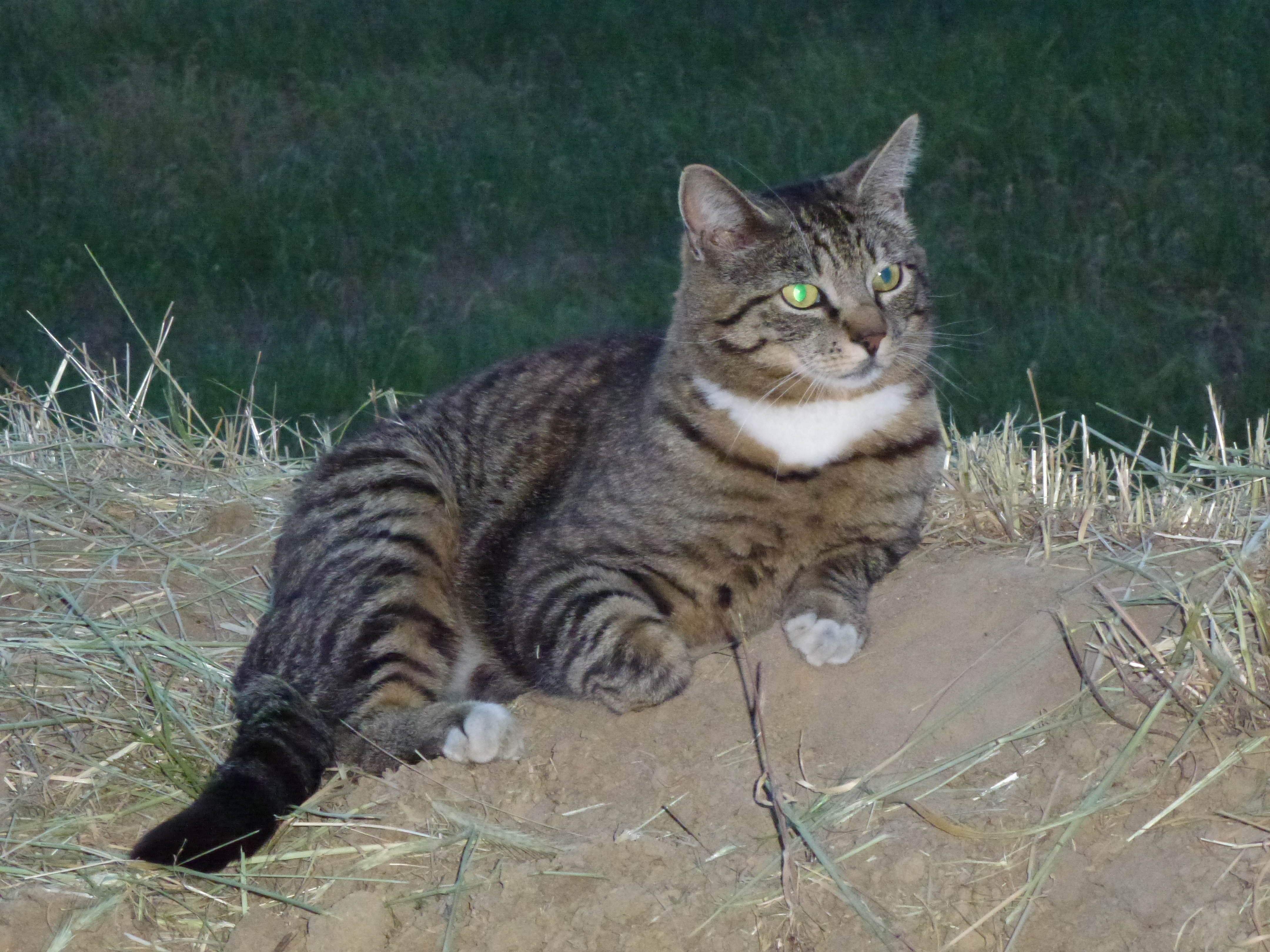
Today, our cats are scheduled for their annual visit with Dr. Garrett, at the Idaho Humane Society veterinary clinic. This has necessitated keeping all three of them in the house for about six hours to be sure we make the 1 p.m. appointment.
Archie [aka Archimedes] and Tesla would normally stick around the house all day, in the yard, on the deck or inside, but Edison usually shows up only at mealtimes, sometimes hanging out for a couple hours, then disappears who-knows-where? till the next meal, which he has been known to skip upon occasion..
Early this morning, I put “DON’T LET CATS OUT” post-it notes on each of our door to the outside as a reminder to those of us for whom the annual feline outing may not be upper-most in our thoughts. It’s been a seasonably cool morning in the 60°s F, so it didn’t take long for all three cats to realize that their freedom to roam was being severely restricted. So was mine.
After the first hour or so, the caterwauling became intense. Not only were they crying to get outside, they were getting grumpy with each other. Cats are not particularly sociable animals. Eddie and Tesla have been together since birth. Archimedes, while of the same litter, was separated from them for several years before returning to the fold where, after a few years he has become tolerated (most of the time) by the others.
In the past few hours, there’s been little indication of comradery. There was an attempt by Tesla and Edison to break through the screen in my office window; Edison almost attacked the hands that feed him as I closed the window to thwart the attack. Meanwhile, Archie was dislodging the window-fan in the basement and escaping through the resultant opening.
So, I’ve resorted to caging all three of them a full two hours before their scheduled appointment. Now the fighting and caterwauling have lessened and are directed at the cages
St. Luke’s Expansion Plan
I am truly torn over the St. Luke’s master plan. I would like to see the hospital expand in its present location in a conscientious manner. I do not think that I, personally, would be affected by the closure of Jefferson, but I don’t think closing Jefferson is necessary for St. Luke’s to meet its objectives.
A bit of background: I have lived in the St. Luke’s neighborhood since 1982, first renting on 2nd St. a few blocks away. In 1986, we bought our home in Aldape Heights, overlooking St. Luke’s about a mile away. One of the reasons I decided to locate there permanently is the proximity to St. Luke’s, where my primary care provider, a couple of my specialists, as well as the hospital and its ancillary services—labs, radiology, ER, etc.—are within a 15-minute walk or a five-minute bike or car ride.
That said, unless I am headed for the St. Luke’s “campus” itself or south on Broadway, I avoid the Avenue B-Jefferson-Fort-Reserve streets intersection whether walking, cycling or driving. I prefer, for safety, to weave through the Fort Boise recreational complex if headed west or downtown, or through the East End if headed east or southeast. The proposal for a properly designed, modern roundabout at the Fort-Reserve intersection is one aspect of this plan I wholeheartedly endorse.
What troubles me most about St. Luke’s proposal is the high-handed way they have approached it. Apparently their administration and public-affairs folks haven’t heard of strategic development of informed consent. It entails identifying all of the affected stakeholders at early planning stages of a proposed action and involving them deeply enough in the decision process that they have all the information upon which the ultimate decisions are based. While they may not agree with the ultimate outcome, they are much more likely to assent, having been heard and understanding how the various costs and benefits were weighed. Additionally, the stakeholders actually may contribute to a better decision if they are truly heard. St. Luke’s initial “my way or the highway” is a two-way street, as they have learned. It has brought out a sentiment that truly surprised me, with many of my friends and neighbors suggesting that perhaps St. Luke’s should move their expansion to the population center of the Valley: Meridian.
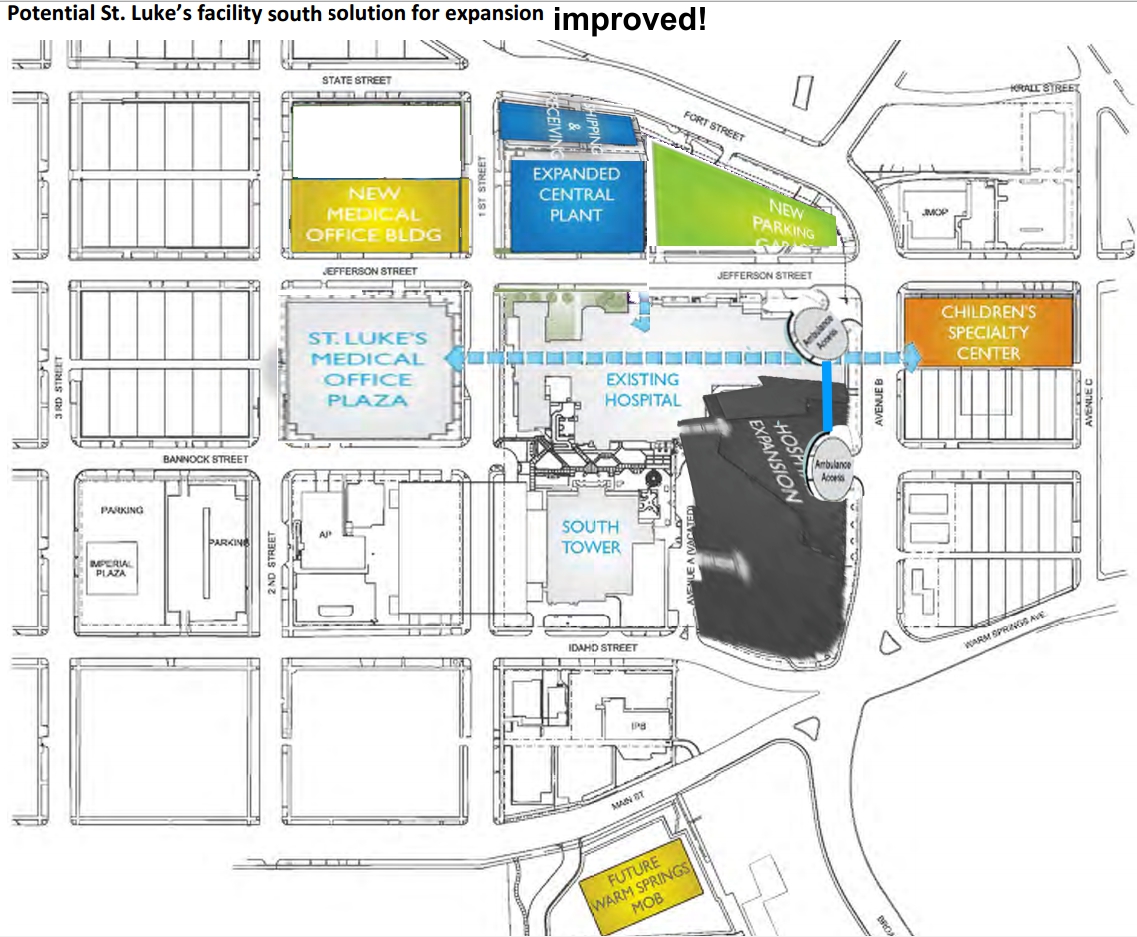
When I saw the footprint of the addition for which Jefferson St. would be vacated, it seemed obvious that a southward expansion by removing or building over the existing parking garage would meet the same horizontal-service-connectivity/continuum-of-care objectives as a northward expansion and would obviate the need for losing two more blocks of public right of way in addition to that already vacated on Bannock and Avenue A.
The rationale for rejecting the “Expansion South” alternative toward Warms Springs and over Avenue B is misleading, unconvincing and somewhat disingenuous. Objections to the Expansion South alternative stated in the plan documents are attached as an end note.* Almost every objection to expanding southward relates not to the main building expansion but to the (unnecessary) placement of ancillary buildings—the medical office building and the parking garage—to the east, across Ave. B on land much of which St. Luke’s does not own.
Below is an illustration of a southward expansion plan that connects the main expansion to the existing hospital floors and corridors as desired but keeps the new parking garage and medical office building north of Jefferson. Logistically, relegating the parking, central plant, shipping and receiving facilities to the Front/First/Jefferson “island” gets them away from the residential areas yet accessible to thoroughfares and immediately across Jefferson from the hospital building. The new MBO is across Jefferson from the existing medical “plaza,” which also can expand to the west or provide additional parking. These facilities can easily be connected across Jefferson—underground, overhead or both—to the main buildings.
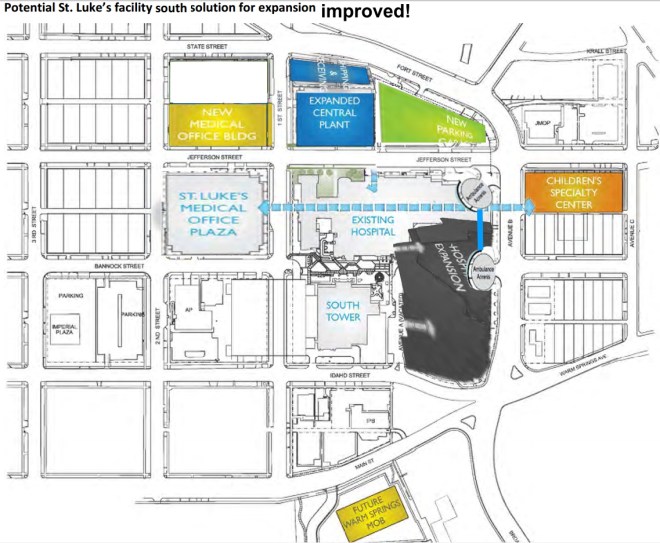
The other objections to a southward expansion stated in the plan relate to location of the main entrance and the emergency department. Here is where another bit of ingenuousness creeps into the objections: Expansion to the south causes redevelopment of the entire front of the existing hospital. Patient and visitor access to front door is problematic. Of course, St. Luke’s preferred, northward expansion envisions just that: redevelopment of the entire front of the hospital by moving it to the northeast corner of the expanded building and closing or converting the existing entrance.
For a southward expansion, several options for locating the new entrance and the emergency department are workable. A couple are shown on the illustration above. A grand entrance at the corner of Jefferson and Ave. B, or further up Jefferson, is possible, as is one on Ave. B across from East Bannock. I don’t pretend to be an architect or planner; I just want to illustrate that solutions are possible without vacating Jefferson.
I have heard a couple objections to the southward expansion that were not stated in the plan. The obvious one is the additional cost of removing or building over the (relatively small) existing parking structure. My response to that is, perhaps that location for expansion should have been considered prior to building the garage. The public should not have to pay for the hospital’s short-sighted planning.
The other objection I’ve heard relates to the inconvenience caused during construction when the existing entrance would be blocked by the southward expansion. That inconvenience can be engineered around with an alternate entrance during construction—a temporary inconvenience, which should be weighed against the permanent inconvenience to the public of disregarding the connectivity already built into the city’s comprehensive plan.
* Below, the objections to a southward expansion stated in the plan documents that are not related to the main building expansion are highlighted:
Reasons for rejecting the “South Solution” presented in the October, 2014, Appendix:
The new Patient Tower would be located between Avenues A and B in place of the existing parking garage and expand through Bannock Street to the current emergency room entrance. The new parking garage would be located across Avenue B between Avenues B and C south of Bannock Street. The Children’s Pavilion and the new Medical Office Building would be combined in the block north of the garage. This expansion would require the relocation of the emergency department entrance to Jefferson Street, and cause a significant impact to the traffic load on Jefferson Street. Access on Bannock between Avenues A and B would be eliminated to accommodate the expansion of the hospital. Congestion on Bannock Street between Avenues B and C would be increased due to lobby and parking garage entrances, increasing the potential for vehicular-pedestrian conflict on this block. The location of the parking and lobby entrances on Bannock Street between Avenues B and C would likely increase the use of Avenue C as an access route, increasing the encroachment on the neighborhood. Skybridges over Avenue B would provide the conduit from the parking garage to the new hospital and between the new hospital and the Children’s Pavilion/Medical Office Building.
With the parking and lobby entrances on Bannock Street, queue lengths could extend back to Avenues B and C during peak hours. Increased congestion is correlated to increased emissions and decreased air quality. The increased traffic exiting the hospital lobby or parking garage left onto Avenue B from Bannock Street would likely require a signal to get onto Avenue B. Proximity to the Warm Springs signal would be a challenge for signal timing. Additionally, as noted with the expansion to the east, St. Luke’s does not currently own all of the property between Avenues B and C from Warm Springs north to Jefferson Street. Acquiring these properties requires time and resources.
Reasons for rejecting the “South Solution” presented in the original plan as revised December, 2014:
- With some exceptions, St. Luke’s does not currently own the property required to accommodate the South Solution.
- Development to the east across Avenue B straddles Zoning Districts H-S and R-3, and a Minor Arterial. Rezoning to allow the new use involves risk and decreases possibility of success.
- Internal connectivity and circulation becomes inefficient and problematic between the medical office building (MOB) and the expansion.
- Bannock Street MOB drop-off and garage access would require closure of Bannock Street to through traffic.
- Additional access points would be necessary on Avenue C, increasing congestion deeper into the East End.
- Insufficient floor area for the anticipated building program would cause the height of the proposed expansion to increase.
- Expansion to the south causes redevelopment of the entire front of the existing hospital. Patient and visitor access to front door is problematic.
- Access to the Emergency Department becomes challenging.
- Parking is potentially eliminated at the main hospital entrance. All parking would be located across Avenue B from the main hospital.
- All new traffic volume is concentrated at Warm Springs/Avenue B/Main/Idaho Street intersection, further congesting an already congested area.
- Street level connectivity between new construction and existing presents safety challenges to pedestrians crossing Avenue B.
Building Boise Bike Lanes
Brilliant minds
I am continually amazed at the stuff I come across on the Internet. Recently, a friend turned me on to the work of Ray Kurzweil, a genius and futurist whose book The Singularity Is Near has been made into a movie.
Kurzweil’s hypotheses about the implications of reaching a “singularity” [a term borrowed from physics] with exponential advances in information technology give hope that the apocalypse just over the horizon may actually be avoidable:
https://www.youtube.com/watch?v=EtataLdqNvw
https://www.youtube.com/watch?v=qlRTbl_IB-s
YouTube has a way of clumping information. So, today I watched the presentation of another genius who popped up when Kurzweil’s lecture concluded.
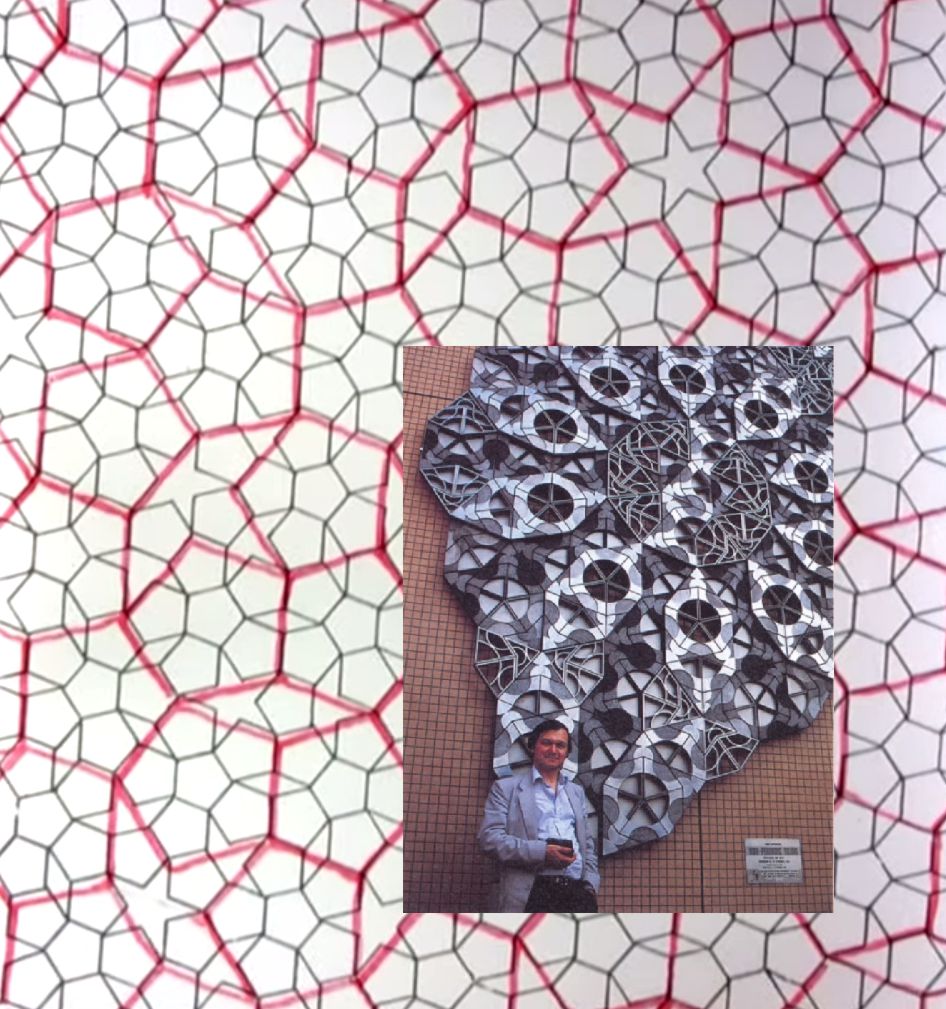
I once thought I was going to be a mathematician, which fantasy vanished as I struggled through second-year calculus, when I could no longer visualize geometrically the algebraic operations of higher-order equations. Instead of giving up on math, I probably should have avoided analytics and headed over to topology. I am still fascinated by mathematical ideas, especially when they have a visual component, which is probably why this presentation by Roger Penrose talking about his tiles caught my attention. In this talk about tiles, Penrose explores mathematical ideas whose roots Pythagoras planted in ancient Greece, ideas explored by Plato, Kepler, Escher, and many others.
While I cannot fathom much of Sir Roger’s explanation of how he arrives at the intricate tiling arrangements, it is just fascinating to watch the mind of a genius at work on abstract concepts that have a profound bearing on our understanding of the physical structures, energy patterns and information fields that pervade our reality. Interesting, the way the pentagram keeps cropping up, whose mystical associations are ancient; Euclid devoted a healthy chunk of the Elements to construction of this Pythagorean symbol of Health.
Roger Penrose – Forbidden crystal symmetry in mathematics and architecture
France 2004
Rummaging through Gallic adventure memoiries, I recalled a slide show I pulled together a few years ago for friends headed to France. They are images from my most recent trip to France, 2004:
It takes a while to download, but I think it’s worth the wait. If you download and run the slides on Acrobat Reader, I think it’ll run like a slide show. I have not put a soundtrack to it—yet. Let me know what you think. Please report technical difficulties. I’m looking for ways to make this site more “media” friendly, suggestions invited.


You must be logged in to post a comment.