Boise Balsam

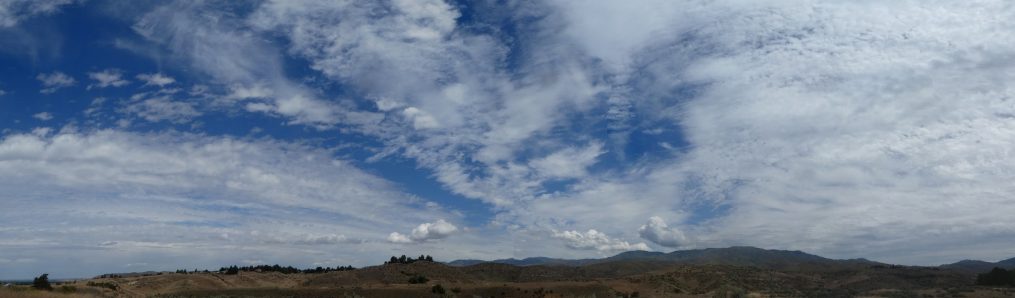
I’ve wanted to properly display a panorama of the Boise skyline that I created a few days ago with a series of digital images I made from a field of yellow arrow-leaf balsam flowers in the Fort Boise Military Reserve overlooking downtown.

Here’s my latest attempt:

0 Balsam-Boise pan

https://plus.google.com/u/0/photos/118172392986028742669/albums/6004439893502745393/6004439893990354594

This is a Google+ link to the panorama that I previously posted on Facebook, where there is no way to enlarge the image and pan the skyline.

Once you establish the link, above the image click on the little magnifying glass icon with  the “+” sign. A box appears to the upper left that enables enlarging and panning the image from the M-K Plaza building on the left to the 6th & Fort, Jim McClure Federal Building on the right.

Thanks to Mike Rolig at Google, who turned me on to this capability of Google+.

I’ll be looking for a way properly to display panoramas here. If you’ve had success doing that with Word Press, please tell me how.

Essence of Evil

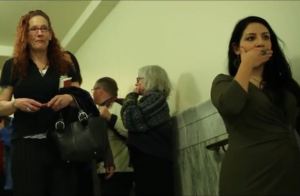
Michael D Gough and Cammie Pavesic are at work on a documentary about the effects of Idaho’s failure to add the words sexual orientation and gender identity to its human rights law. They have just released part of the project, which features Julie Zicha talking about her son, Ryan.

zichaCapture

It is a powerful piece:

https://www.youtube.com/watch?feature=player_embedded&v=EBSQUCEe6zI

As I wiped away the tears, the despair in Ryan’s suicide note echoed in my mind:

Pocatello is the essence of evil. People are always judging you, pointing at you, staring at you because you’re different. I just can’t do it any more…. I can’t see another way out; I can’t deal with another day.

In a sense, not only Pocatello but Idaho’s essence is infected by the evil in our failure as a community to protect people from being discriminated against because of their sexual orientation or gender identity. How do we right this wrong when our elected representtives refuse even to give it a hearing?

My initial impulse is to go down to the Statehouse—with several thousand fellow Idahoans. Let’s let the powers that be know that they cannot go home to run for reelection until they have completed this part of their civic (and civil) obligation: Add the Words! For more than eight years, they’ve been putting it off out of political convenience.

So far, hundreds have been willing to face arrest in this effort. What would happen if thousands showed up to insist that they Add the Words?

Zicha3

Shouldn’t we shut ’em down until they listen to Julie Zicha and many others and hear about the consequences of their inaction, which is itself a form of unjust discrimination? Let’s put an end to the foolishness of putting eradication of our wolves and arming of our campuses ahead of the equal rights of our citizens.

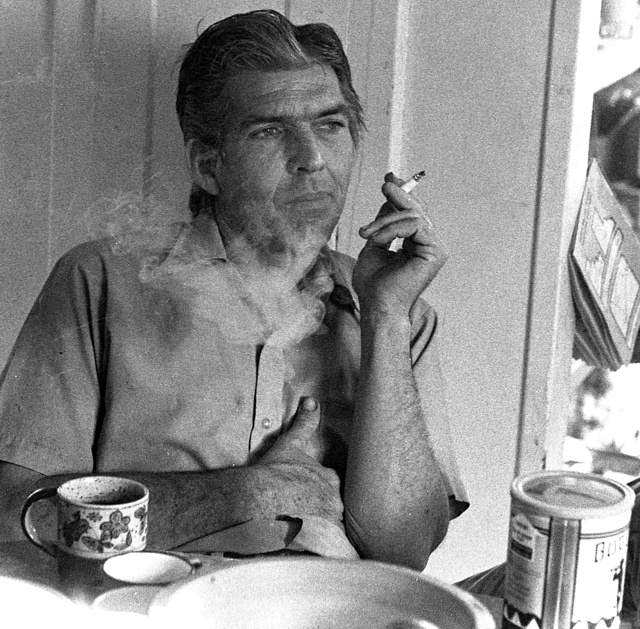
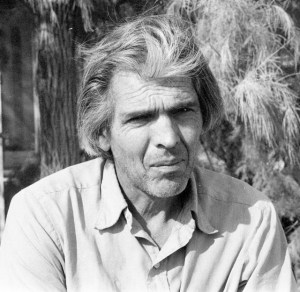
Paul Gaylord Crockett 1924–2014

Crockett1975016

Paul Gaylord Crockett
Feb. 24, 1924–Jan. 10, 2014

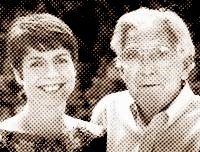
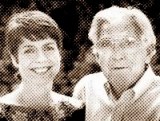
I have received word from his wife and partner of 40 years, Sylvee, that Paul Crockett, “an amazing, incredibly wise man, took his departure on Jan. 10, 2014.
Sylvee-Paul-thumb

Sylvee & Paul Crockett

“He held up so much for so many that I hope the Earth does not crack,” Sylvee wrote. “Not always kind in the way I wanted, he was ever my friend, always in support and wanting the best for me.

“Such a beloved, Dear Paul, Paul Crockett

“May your flight be easy, your arrival heralded and your travels ever filling your heart with love….”
Crockett1973057

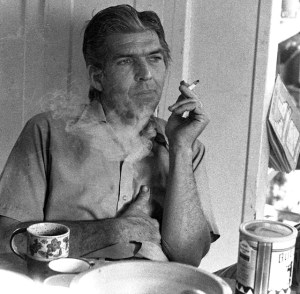
I first met Paul Crockett in 1972. He was taking the gate as manager of Desert Sun at a dance-concert in Lone Pine, a small desert town below Mount Whitney in eastern California. I had heard the group perform a week earlier at a movie theater in Bishop, where they had opened for another group. Desert Sun’s self-styled “conscious music” received a none-too-favorable reception by a crowd high on reds, whites, and booze.

The Lone Pine concert was held in the dark and dingy town hall, the size of  a basketball court, with a stage at one end. The musicians were more at home in the smaller venue, where they could almost touch the few dozens of people who showed up to dance and listen. I was in my early 30s, going through some heavy personal changes. The men on stage were ten years younger than I, yet their music communicated an almost mystical acquaintance with personal struggles to find oneself. They played one song a couple of times that night that particularly resonated with me:

Look around. Where are you?
Look around. What ya goin' through?
Is it real or only what you feel?
Look around. Where are you?
Are you trapped by your philosophy?
Has what you learned really set you free?
Look around. Don't worry.
You got the rest of infinity.
Where are you?

I wanted to know more about these guys and what they had been going through. During one of the breaks I approached the flutist and apparent leader of the group and asked if they’d like to go out in the hills with us after the concert and get stoned.

This is how we get high,” he replied, off-handedly, without judgment.

“Far out!” I said, rolling with it. “Well, come along anyway and get high off the rocks. Have you ever been to the Alabama Hills?” He indicated that he hadn’t.

“They’re these unbelievable rock formations just a few miles out of town,” I continued. “There’s a full moon tonight and it’s like being on another planet out there. We live on an old mining claim; and if you don’t have to get back to Shoshone tonight, you could stay with us there.”

I felt an immediate rapport and wanted to get to know him better. He seemed interested but said he didn’t know what their plans were yet. He’d let us know after the concert. As the music resumed I was swept back to the dance floor.

When the concert ended and the lights came up, I grabbed a broom to help clean up. The fellow who had been collecting the gate was also sweeping. As we disposed of a small pile of rubbish we had swept to the center of the room, he introduced himself as Paul Crockett, the group’s manager. Leaning on our brooms we engaged in a bit of small talk in the course of which he mentioned that he had been prospecting around the Southwest for a few years. I asked where.

He mentioned places in New Mexico, Arizona, Nevada, and Goler Canyon in the nearby Panamints, the range of mountains forming the western boundary of Death Valley. His familiarity with Goler Canyon immediately sparked my interest. It was there that Charles Manson and his Family had been arrested a few years earlier. Not only had Crockett been there around the time of Manson; he had spent some time with him. I was bursting with curiosity.

“You see those two fellows up there?” Crockett continued, pointing to Paul Watkins, the flutist, and Brooks Boston, the lead guitarist, who were packing up equipment on stage. “They were with Charlie.”

“You mean they were in the Family?” I asked.

“For more than a year,” Crockett said.

I told him about my interest in what actually went on in the Manson Family and asked if he would do an interview about his experiences with Manson. He agreed and suggested that I would also be able to interview Brooks and Paul about their experiences since the court order silencing them had recently been lifted following Manson’s conviction for the Tate-LaBianca murders.

With the hall cleaned and the group’s equipment packed, we moved our discussion to the Sportsman Cafe. Over coffee I arranged to visit them in Shoshone a week later when they would give me as much time as necessary. Paul Watkins did accompany us to the Alabama Hills that night, but I decided to deferred discussion of his association with Manson and contented myself with small talk and listening to him play the flute.

My stay in Shoshone lasted ten days. I had arrived hoping to gain some insight into the internal structure of the Manson Family, perhaps enough material for an article. I was particularly interested in Manson’s methods of “programming” his followers, a subject about which little of substance had been written. I got much more than I bargained for.

I found in Paul Crockett a homespun guru. His knowledge of the way realities are structured by agreements enabled him to understand what Manson was up to. Crockett’s insight enabled him to show several members of the Family how to break from Manson.

Following those ten days of interviews at Shoshone, a few months later I moved to Tecopa, a town a few miles south of Shoshone where Crockett and Desert Sun had relocated. I spent the better part of the next two years with the group.

For my profile of Paul Crockett published in Psychic (later, New Realities) magazine in 1975, go to:

https://garyerichardson.com/wp-content/uploads/2013/06/crockett-profile001.pdf

Paul Gaylord Crockett 2/24/1924–1/10/2014

Paul Gaylord Crockett
2/24/1924–1/10/2014

Kiev in Flames!

A vivid slide show of the deadly protests in Ukraine. Let’s hope it doesn’t come to this in the US where we seem to have lost sight of what brought us together as the gaps that divide us seem to have widened.

An anti-government protester sits on the Founders of Kiev monument during clashes with riot police in central Kiev on Feb. 20.

Dead bodies lay on the ground surrounded by fellow anti-government protesters during clashes with riot police in central Kiev on Feb. 20.

http://www.foreignpolicy.com/articles/2014/02/18/kiev_in_flames_protest_escalate_ukraine?utm_source=Sailthru&utm_medium=email&utm_term=*Situation%20Report&utm_campaign=SITREP%20JAN%2020%202014

A Great American Has Passed

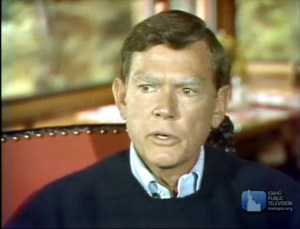
On Feb. 9, Peter Thomas Johnson died after a long struggle with Parkinson’s disease.

I had the great pleasure of getting to know Peter beginning in 1986, shortly after he had stepped down as administrator of the Bonneville Power Administration in Portland and returned to Idaho to pursue his muse(s). As a producer/reporter for Idaho Public TV, I profiled Peter on “Idaho Reports.” The eight-minute video can be viewed on IPTV’s “Idaho Reports” website http://idahoptv.org/idreports/ (scroll down to the profile):

PeterJohnson

Thanks to cameraman & director Ricardo Ochoa for retrieving the profile from the IEPBS archives and posting it online.

Shortly after I left Idaho Public TV, Peter got me to produce a TV spot of him, as the former head of BPA, lauding Republican Slade Gorton for reelection to the US Senate from Washington. Peter could be very persuasive!

Several years later, Diane Ronayne and I worked with Peter, his daughter Linda Williams & cartoonist Mark Larson to produce signage and a series of publications for the Big Payette Lake Water Quality Council, which Peter had kick-started to educate people about the effects of McCall’s growing popularity on the lake that had become a center of his universe. He was a man who truly knew how to get things done.

I was struck at Peter’s memorial service Tuesday when Carol MacGregor approached the podium: Over the BSU Stueckel Sky Center sound system, harmonized voices of “Dear Old Dartmouth” sang out the words of the Alma Mater that so fit Peter:

For the sons of old Dartmouth…
They have the still North in their hearts,
The hill-winds in their veins,
And the granite of New Hampshire
In their muscles and their brains….

For the sons of old Dartmouth…
They have the still North in their soul,
The hill-winds in their breath,
And the granite of New Hampshire
Is made part of them till death.

“Payette Lake granite is a lot like New England’s,” I thought.

In her eulogy, Carol MacGregor, whose father gave Peter his start in business and who at Peter’s urging went Back East to college herself, spoke eloquently of how Peter balanced success in business, public service and the arts through a life whose intention was shaped in part by his Dartmouth education. From his chiseled, athletic features to his solid perseverance, Peter Johnson personified American granite.

Please note: An earlier version of this blog incorrectly identified the disease with which Peter Johnson struggled in his last years.

Why did Mike Simpson vote for then against the shutdown?


Thursday morning, I sent an email to Idaho’s 2nd District Representative Mike Simpson applauding his vote to end the government shutdown. I also asked for an explanation of why he voted for the shutdown in the first place when he knew as well as I what the outcome would be. Thus far, all I have received in response is this form email letter:

As you may know, I voted in support of H.R. 2775, the Continuing Appropriations Act of 2014, to re-open the federal government, avoid default on our nation’s debt, and preserve the historic spending cuts Republicans have won in Congress over the last three years. It passed in the House by a vote of 285-144 after passing the Senate and has been signed into law by the President.
Of course I know that. I’d been writing him repeatedly over the previous two weeks urging just that!
My vote was about the thousands of people facing layoffs at INL, the multitude of businesses across Idaho that told me their livelihoods were at stake and the millions of folks across the country who couldn’t afford the devastating impacts of default on their investments and retirements. I strongly believe there has to be a way to address our nation’s fiscal problems without making them worse in the process. [emphasis added] That is the result I will continue working toward during the time we’ve afforded ourselves with this agreement. 
Simpson knew going in that a government shutdown would bring about these problems for his constituents, yet voted to effect the closure, and voted to end it after 16 days, the day before the furlough of those thousands of INL employees was to take effect.

The fight over Obamacare may now move to another venue, but the fight is far from over. While I strongly believe we should continue working to delay the entire law for one year, I also believe that Obamacare may collapse of its own weight. I have always said that it won’t work. I don’t believe it will contain costs. I don’t believe it will improve access. And I certainly don’t believe that it can survive the scrutiny it is sure to receive once it is fully implemented and its impacts are fully realized. At that point, Republicans will have a much stronger hand.

It was the votes of Simpson and his fellow Republicans that tried, unsuccessfully, to move the fight over Obamacare to the government shutdown “venue.” Before the shutdown, Simpson said that shutting down the government was not the correct venue for trying to derail Obamacare. So why in late September did he vote twice for versions of Huse Joint Resolution 59 that would keep the government funded through December 15 only if Obamacare were delayed for one year? “The one year delay in Obamacare just makes sense,” Simpson said in support of his vote. Three days before the shutdown, Simpson also voted to continue to pay members of the armed forces and his own personal bill to keep national parks and monuments open if the government shutdown. They passed only in the House.

This bill [H.R. 2775], while far from perfect, preserves the progress Republicans have made in reducing spending and moving toward a balanced budget. It ensures thousands of people in eastern Idaho won’t lose their jobs at INL, ends the uncertainty for Idaho businesses that have been impacted by the shutdown and are terrified of default, and it gives Congress the time to approach our budget challenges in an honest, collaborative, comprehensive, and enduring way over the next few months. I am deeply hopeful that we will now look toward a grand bargain, or ‘big’ solution that includes spending cuts, tax reform, and entitlement reform. The American people understand that doing so will require tough decisions, difficult sacrifices, and political courage. I am ready to face those tough decisions and I hope a majority of my colleagues in the House and Senate are ready to do so as well.
I’m not holding my breath. Of course, the “progress” in reducing spending and moving toward a balanced budget was the bipartisan “sequestration” that cut government expenditures across the board. It is interesting to see Simpson claiming this meat-ax approach to the federal budget, with which few in either party are happy,  as a Republican accomplishment.
What is Simpson’s political calculation with this switching back and forth, first publicly acknowledging that hijacking the government to stop Obamacare was not a good idea, then voting twice for HJR 59 and, finally, after 16 days and  an estimated $16- to $24-billion hit to the country’s economy, voting to end the shutdown. A glance at the several hundred comments on Simpson’s Facebook page tells the story of what he’s up against.

“Democracy’s been suspendend…”

On the night of Sept. 30–Oct. 1, 2013, Republicans changed the rules of the US House of Representatives so that only the Majority Leader can call up for a floor vote a resolution returned to the House after Senate amendment, like the Senate amendment “cleaning” House Joint Resolution 59 (the resolution to continue funding government operations) of its Obamacare-defunding provisions.

Under this late-night amendment of House rules, only Majority Leader Eric Cantor can end the government shutdown! Prior to the eve of the current shutdown, when the rule change was pushed through, any House member could move to bring such a disagreement between the Senate and House versions to a vote.

Recently, Maryland Congressman Chris Van Hollen disclosed this clever maneuver on the House floor, suggesting at the end of his remarks that democracy had been suspended.

You may watch Rep. van Hollen’s video here.

“Standing ground”

“…calls to Idaho’s congressional delegation are running two to one or more for continuing the shutdown until President Barack Obama defunds or delays his health program. That’s why all four of Idaho’s Republican congressmen have steadfastly – up to now – stood their ground opposing reopening the government,” Rocky Barker reported in a Sunday, Oct. 13, Idaho Statesman story, which has gone nationwide.

In that loaded phrasing, Rocky telegraphs the subliminal tea-party message that, like George Zimmerman in Florida, the guys who have shut down the US government are just standing their ground to protect the neighborhood from the likes o’ that uppity, hoodie-wearing black kid from the white house down the road who don’t belong in this neighborhood anyhow!

“I believe we should stand our ground,” said Ted Cruz, the tea-party senator from Texas, pledging to derail Obamacare over the president’s guaranteed veto a few weeks ago, the Associated Press reported. Cruz was working up to his one-man fauxlibuster on the Senate floor, where he stood his ground for 21:19 hours to stop a House bill, which would do what he wants, from coming to a Senate vote, where it was amended after the senator’s tirade was over.

In recent weeks, such ground-standing has elevated Cruz to be the congressional face of the tea party—and it’s apparent shutdown strategist and visionary. While it is Congress that holds and has tied the government’s purse-strings largely through their efforts, Cruz and his ilk blame Obama and the Democrats for the government shutdown. Yesterday, Cruz co-opted a rally of veterans shut out of the World War II Memorial by the government closure when more than 300 Park Service workers who staff and maintain the National Mall, where the memorial is located, were furloughed.

Sunday’s protesters removed the barriers at the WWII memorial and stacked them outside the White House gates several blocks away. Park police, who are working without pay during the shutdown, secured the memorial again following the protest. Seems like Mr. Cruz wants federal employees to support his tea-party shenanigans by working overtime without pay.

Supposedly, Cruz and other tea-party Republicans want to keep the government closed until the Patient Protection and Affordable Care Act is defunded or delayed, as Rocky Barker has relayed. However, there’s something else going on.

While polling shows that less than a third of the country (28percent) supports the shutdown, it hasn’t mattered. House Speaker John Boehner could end the charade at any moment, by allowing a vote on a “clean” continuing resolution to loosen the government purse-strings. Boehner, too, has adopted the “stand your ground” motto and stance. He has concerns such as keeping both his seat representing his Ohio district and his seat as speaker, in control of the House of Representatives.

Idaho’s second congressional district is an excellent example of what’s at stake in the push to move the Grand Old Party even further to the radical right. Second district congressman Mike Simpson is a very conservative Republican, but he’s been in Washington long enough to understand, respect and master the process. He is on record saying that a shutdown is not an effective tactic for attacking Obamacare, which he has voted to repeal scores of times along with other House Republicans.

With sentiment for continuing the shutdown running two-to-one at home, Simpson would be foolhardy to sign a discharge petition to force a House vote and courageous to help pass a clean continuing resolution. According to Rocky Barker, Simpson hoped the situation would force an agreement to reopen affected parts of the federal government. Simpson has proposed piecemeal authorizations that would reopen the National Parks, for example. He said he could support a continuing resolution to end the shutdown without linking it to the Affordable Care Act for a short time, possibly two weeks.

If the shutdown continues through the end of the week, the Idaho National Lab, a mainstay of the Eastern Idaho economy (and Simpson’s wife’s employer) begins furloughs. Then, perhaps Simpson will hear the other side of the story. He may have a real race on his hands because of the shutdown. Unseating what passes these days as “moderate” Republicans like Simpson, and replacing them with more reactionary, tea-party leaning opponents, is another, key objective of the current congressional brinkmanship.

In districts like Simpson’s across the country, where Republicans are guaranteed the seat and where many of the 28 percent of Americans who support hijacking the government to stop Obamacare reside and vote, tea-party patriots are standing their ground and they’re not gonna let folks like Mike Simpson trample it.

Meanwhile, Washington Post columnist Matt Miller interviewed Canadian capitalists who wonder what all the fuss is about:

Canadians don’t understand Ted Cruz’s health-care battle

My take-away is that American businesses are crazy not to support a single-payer system, which would relieve them of any responsibility for employee health care, a huge and complex part of many companies’ costs.

Related articles

Syrian novelist bares revolution’s inner struggles

Syrian novelist Samar Yazbek examines the moral ambiguities of her country’s rebellion, in a Washington Post guest-op, “The novelist vs. the revolutionary: My own Syrian debate”:

Samar Yazbek

Samar Yazbek

The revolutionary, who has met with leaders of Jabhat al-Nusra, Ahrar al-Sham and other influential jihadist battalions, is gripped by fear at what they represent. But she believes that Assad has encouraged them, knowing that an unsavory alternative to his regime makes the international community hesitant to intervene.

* * *

The novelist regrets that the opposition movement has evolved from its peaceful origin. She refuses to condone, let alone applaud, armed uprisings. “Isn’t political opposition the better alternative?” she meekly suggests.

* * *

These two women crash about beneath my skin, colliding at every twist and turn of this unfinished narrative. But there’s one thing they agree on: Anything that might bring a definitive end to the murderous Assad and his regime is a force for good. The question is: Does the world really want to stop these atrocities, or is it happy to stand by and watch?